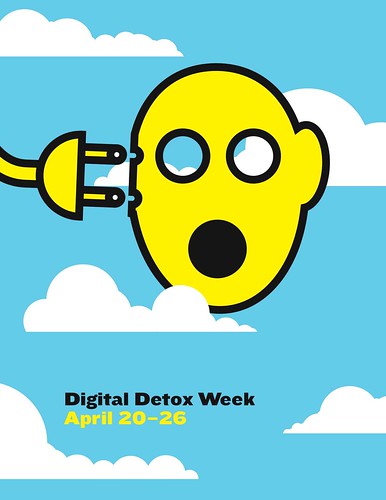
Showing posts with label Reaction. Show all posts

Digital Detox - Day 4

, | 1 comments

The experience of driving is evolving; It started as a boring, silent burden and is slowly  becoming a near-meditative state, both outwardly and inwardly focused. It toggles back and forth. Today, I saw a herron flying and smelled the fields as the wind whipped through my hair at 80km/h - all of which I would have missed if I'd been listening to music or the radio.

  •  10: Wake up
  • 10:30: Renew health card
  • 10:45: Buy new chess board from value village to replace the missing one ($2.00!)
  • 11-3: Bum around, read, play chess, lift weights.
  • 3:30-6: Leave house, hang out with a friend at a coffee shop. Play chess. Walk around town for a bit, then head home.
  • 6:15: Hang out with relatives
  • 6:45: Swim
  • 7:00: Pick up food
  • 8-10:30: Eat, play piano, read, play more piano, journal this. 

Digital Detox - Day 3

, | 2 comments

  • 6:45: Woken up by co-Digital Detoxer (co-DD), went back to slept since I didn't have to get up for another hour and a half
  • 8:20: Got up
  • 9:00: Left for Windsor
  • 9:30-12: Attended University of Windsor convocation (Co-DD was graduating)
  • 12:30-2: Cora’s for brunch
  • 2:30-4:10: Mall (this time frame is a bit off, and I mostly hung around outside the mall since I didn't want all the advertisement exposure and had no money)
  • 6-9: Work

When you're busy, you don't' have time to sit and dwell. This is a widely used approach to distressing situations, which can vary widely. To compare what I'm doing to distressing situations in people's lives is ridiculous, so I'll stop the comparison there. Today, I decided that I would continue with this digital famine until I could have one pure day - One day where I can live truly digital-less. I'm hoping, desperately, that that day will be tomorrow since I have no plans and work won't be able to force the usage of things on me. Starting to crack a little bit, really craving Facebook, Reddit, and e-mail. I feel a little bit of pressure from ignoring my e-mail in case something important comes up, but I then realize that they'll probably get in contact with me by some other means if it's that important. Typical craving, though: grows until it comes to a head, then it terminates.

The general upside of this is that I'm forced to have a more normal sleep schedule because I'm too tired to read at night and I wake up with the sun. Getting a lot of reading done, though.

Cheated:

  • Mall Adverts
  • Texted Co-DD (he allowed the use of his cell phone for work purposes) during his convocation to tell him he should shake Peter Mansbridge's hand (who was an honorary grad for this convocation)
  • cell phone as camera
  • One phone call that I promptly ended

Digital Detox - Day 1

, | 2 comments

A little over a week ago, I came into contact with the idea of doing a digital detox. The thought process seems to be something along the line of seeing what effect these devices have on our daily lives, experiences, and our sense of self. I've heard of people doing something similar when they attempt vegetarianism. I thought I'd give it a go and started it a day after hearing about it.

The Details of the Digital Detox:

  • No cell phone
  • No Ipod or car radio
  • No computer
  • No TV
  • Deactivating Facebook
  • Avoiding digital devices whenever possible (had to switch to an analog clock for this, too)

Note that it’s digital, and not technological. I considered technological, but that would be quite impossible due to work, transportation, and the like. I quickly recruited my friend, who isn't that digital to begin with, to join me on my endeavor for support and to help work out the kinks of what should and should not be allowed, why exactly we were doing this, and what we were hoping to gain from it.

Like, I said, When I started, I began in the same vein to when people decide to do a trial run of vegetarianism; Do you feel any different from eating meat? is there a difference in living costs? Does eating meat affect energy levels? Similarly, I decided to see if there were any effects on how I live in and experience the world. The idea was brought to my attention through a magazine known as Adbusters (which is extremely worthwhile, by the way).

One thing you'll notice is that the style of each day's entry does not remain consistent, as I either got lazy, forgot, didn't like the previous format, or an assortment of other reasons. I'm going to put up what I wrote untouched just so you can see the progress through a week (which takes a different direction somewhere in the second half of the week). I decided to keep my thoughts on a pad of paper during the week in the absence of a computer to record it on. Here's the first day:


Day One:

Up at ten, bored by one-thirty. I had an interview at noon that was a half hour drive away. The trip there and back was not interesting, to say the least; No radio, mildly sleep deprived, entirely rural surroundings (which means windows up due to wind from driving speeds, and to cut down on the smell of manure).

At home, I played some piano and started collecting various liqueurs that might mix well in the sangria I was planning on making, particularly for the solstice. I started considering getting drunk, but what the hell is the point of being drunk, alone, in silence? My parents have left town for the day and I'm trying to avoid using my cell phone, even if it's just as a phonebook.

At this point, It makes me reminisce about the many other times I've done things to test my will for some end: eating right, exercise, lent, etc. Stage one: withdrawal that creates an intense yearning for what you currently cannot have, which will eventually brake way for stages 2 and 3: indifference, then seeing your connection to the forsaken thing for what it is (a crutch, an addiction, the benefits and detriments, etc.)

I tried to read, but ended up falling asleep until four, with brief interruptions for the phone (I allowed the phone, but tried to avoid cordless ones). I dreamt that I was on the computer, going automatically to Facebook and reactivating my account. I got mad at myself, reshut it down, and repeated the process again. Bizarre dream.

Went out for the rest of the night with friends, which distracted me from the lack of tech. Bed early, as there is nothing to do at night by myself.

Cheated:

  • Calculator for the interview
  • Text received, but not answered

Afterthought: At this point, I didn’t really have a clear definition of what I was planning on doing, or trying to achieve. So I was clear cutting certain technologies which don’t make sense to cut by my later definition.

Motivation Theory and Video Games

, | 0 comments

I came across this post the other day and thought it was a great analysis of the habits we gravitate towards, namely genres of video games for you gamers out there. I fully support the following message:

It turns out there are two different ways people respond to challenges. Some people see them as opportunities to perform - to demonstrate their talent or intellect. Others see them as opportunities to master - to improve their skill or knowledge.

Reaction: 5 Psychological Experiments

, | 0 comments

Alright, this post is going to be a reaction to an article published my Cracked.com. Cracked is known to do many lists similar to this. Usually I'll just read them, letting them slide if I disagree with them. This time is not such a case because it's so very frustrating to read this because they make such a faulty conclusion based on these studies. The article is titled 5 Psychological Experiments That Prove Humanity is Doomed.

The introduction is equally ridiculous as the rest of it: "Psychologists know to be careful ... because [they're] never sure what [they'll] find in there." Right. Specifically Psychologists? Not biologists, chemists, physicists, environmental sciences, economics, nor sociology? Oh, that's right. Psychology is somehow set apart because it studies people directly and can come across scary things that apply directly do us (unlike the rest just listed).

Experiment #5. The Asch Conformity Experiment

This experiment, if anything, proves that humanity will be more likely to survive. As much as we don't like to admit it, conformity is a good thing for a species' survival. Think about it: humans are communal beings who rely on one another to survive. If this weren't true, we would all be doing whatever we damn well please, and there would be no society or group to speak of. That kind of framework would ultimately lead to our destruction and we would be picked off by more organized groups of predators, or ones that were physically stronger. Sure, if we did that from the get-go, we could've become lone predators, but then we wouldn't be humans, would we? Furthermore, some participants did hold out given the immense social pressure for this experiment, despite the obvious signs of anxiety that manifested. If you're so anti-conformity to think that conformity equates to doom, your hope lies within these people.

Experiment #4. The Good Samaritan Experiment

Alright, this one may prove their case a bit more than the last one. Here, though, the study was most likely run in western society. Why does this matter? We're very individualistic in the West. Generally speaking, people believe that we get what we deserve; hard work and perseverance wins out no matter what! Plainly speaking, this is a load of shit, but that's another post altogether. My point here is that people with such a worldview will be less likely to help someone in need when they don't have the luxury of time to spare, despite being seminary students (not that priests-in-training are especially moral, anyway). A cross-cultural study of this has probably been done, but I don't feel like digging through archives to find it. Needless to say, people don't feel responsible for things that they aren't directly involved in.

This is related to the old moral dilemma: You're standing at a switch in a railway station. If you don't throw the switch, 10 people are going to die; If you throw the switch, only 1 person will die because it'll change the track that the train will go on. When presented with this problem, the majority of people will flip the switch. Now we change the situation: 10 people are still on the tracks,  but instead of standing at a switch you're standing by a really large fat man. You can guarantee that this fat man will stop the train enough to save these 10 people; Do you push him onto the tracks? Most people say no, despite the same outcomes present are the same as last time.

Experiment #3. Bystander Apathy Experiment

This study also has some merit to their conclusion, but education about this should be able to bring it more under control. Like they teach in First Aid training: take charge, assign specific people to do certain things. If you need someone to call 911 (and you probably will if you're using your mad first aid skillz), you don't yell out "someone call 911!", you say "You! In the Blue shirt! Yeah, you! Call 911!" By doing this, you're assigning 100% of the responsibility on this poor sap, dramatically increasing the chances of the job getting done. Also, you may notice that this experiment was based off of something I covered earlier: the Kitty Genovese tragedy. Bottom line for this experiment: Discovery is the first step to mastery; knowing about this problem is a major step in fixing it. I find their conclusion that we're all seeking reasons to not step in to be faulty. As discussed in the Kitty Genovese post, there are alternative explanations other than people being self-centered assholes who live and let die.

Experiment #2:  The Stanford Prison Experiment

This experiment also gives some merit that we're screwed, but it falls into a similar category as experiment #5: It's simple in-group, out-group views where we conform to what we think we need to do to satisfy, and remain in, the group we're part of. Yes, it got out of hand because power corrupts, but this isn't anything new that this experiment had brought to light. It's not like we're often given absolute power with no checks or balances to keep us from doing whatever we please, is it? Unless you're a sociopath, you'll still follow social norms. Ironically, the very fact that we conform to social norms will stop us from doing things like this, generally speaking, because it's not socially acceptable to abuse others in such a way.

Experiment #1: The Milgram Experiments

They come to a faulty conclusion, yet again, due to the fact that conformity is actually a good thing! Sure, when put to use for perceived evil acts, this is be a bad thing. But consider the flip side: when under the rule of someone with good intentions, people will be more likely to do good things instead of evil. As with the prison experiment, social norms will actually stop us from acting like assholes.

By the way, I question the credibility of the puppy torturing experiment they reference at the very end; Doesn't seem like it would get ethics clearance, and would likely get the full wrath of PETA. It's overly simplified to say that "all it takes to get 8 out of 10 people to torture a puppy is to wear a lab coat and ask them to."

Hey! Want to torture a puppy? Right..

My main reaction to this: Even if every experiment they sited showed the darkest sides of humans (and believe me, there are worse ones than these), it wouldn't prove anything. It's all up to interpretation, as any experiment is. Though, you could also say that science doesn't prove anything, it just disproves things and makes certain conclusions more likely.


The Meaning of Life Found!

, | 1 comments


Really! No.. Not really.

This post is a reaction to what someone commented on one of my other posts that I feel was good fodder to write about. Initially I was surprised by the comment,  but what should I expect from writing on such a touchy, personal topic? What they said was this:

I think the Internet has given a voice to someone who needs more experience in what life truly means before he can comment on it in his recently learned University speak.

Now don't misunderstand why I'm centering this comment out. It's not becuase of his disagreement with my opinion that I'm drawing attention to it, but I am doing so for two reasons: first, it is a nice seguay into what I'd like to discuss, and second, it is probably the most useless, subjective and completely-void-of-thought comment you could make (it's entirely gut feeling; emotional). I welcome dissention as long as they're well thought out, nicely constructed arguments, but to merely make a speculation about what you think I'm like, well, that's an entirely different - and unwelcome - story.

Focusing on what the comment says, they claim that I need more experience in what life truly means. Saying this implies that the author of the comment must have some idea, if only vague, of what life is "truly" about. This also implies that life has only one main purpose or meaning behind it, both assertions I have a problem with.

I'm not claiming to have any idea about the meaning life, nor did I ever claim anything of the sort in any of my previous (nor, hopefully, future) posts. In fact, I've been hovering somewhere between the realm of absurdism  and nihilism for quite some time now, which means that I'm having a problem even seeing any possible meaning from the universe at all. You see, nihilism says that there is no objective nor subjective meaning at all. That's it, no meaning. Yet we, as logical beings, are looking for some meaning, forever to be frustrated in such endeavors. Absurdism, which I now identify more with, says that this clash is called the Absurd; the fact that we keep looking for meaning where there is none is utterly ridiculous (aka absurd). Where it differs from Nihilism is that the individual can find some subjective meaning that is not at all objective, since there is no objective meaning (their relations to each other, theism, and atheism is nicely laid out here). Having said all of that, I think this critic may have found some form of meaning, but to assert that I lack the experience to have come to my own conclusion is a faulty one becuase they're saying that I haven't come to the one meaning (that is, the true meaning) which would stop me from making such faulty claims. Whether I have or have not come to a conclusion about the meaning of life could not be derived from what I had said. All they can conclude is that I haven't reached the same conclusion as them.

We can also look at this from an agnostic sense that ties nicely in with nihilism and absurdism. Let me be clear, agnosticism is not a religious stance by itself. It's just not. Agnosticism is saying whether something is knowable/provable or not. That's it. Do you believe toast is better with jam or butter? You believe it's jam, but you're still forced to be an agnostic on the matter because the truth is that we're dealing with something that is so subjective that it's inherently improvable objectively. In such circumstances, all we have is our opinion. Apply the same argument to God; Do you believe? Yes, no, regardless of facts. Now, Do you think we can ever prove or disprove their existence? Yes? then you're a pure (a)theist; No? Then you're an agnostic (a)theist. To say that you're an agnostic is sidestepping the question while hardly addressing it.


Now that that's clear, I could take the stance that the meaning, there or not, can never be found. I'm agnostic on the meaning of the universe, which would make me an Agnostic Absurdist.

So there you have it, Annonymous Critic. Despite your best efforts to hit'n'run with a mind numbing thought vacuum, I've managed to use your "criticism" in a productive way. Thanks again.

Reactions: Existential Viewpoint: Taking Responsibility

, | 1 comments

I came across a blog named Atheist Spirituality and thought that I’d write a reply to one of their posts.

First, I'd like to say that I like the quote that they took from the movie "Waking Life". Great movie, check it out - though, be prepared to take a break halfway through. It's very philosophy heavy.

Personally, I'm not entirely convinced with the idea of existentialism. I'm not for the idea that god controls our actions, but I don't believe that we have entirely free will, either. Through this post, they discuss what reality we're left with if we discard the idea that god is a guiding force in our lives. They propose that we should seize the day; Carpe Diem!